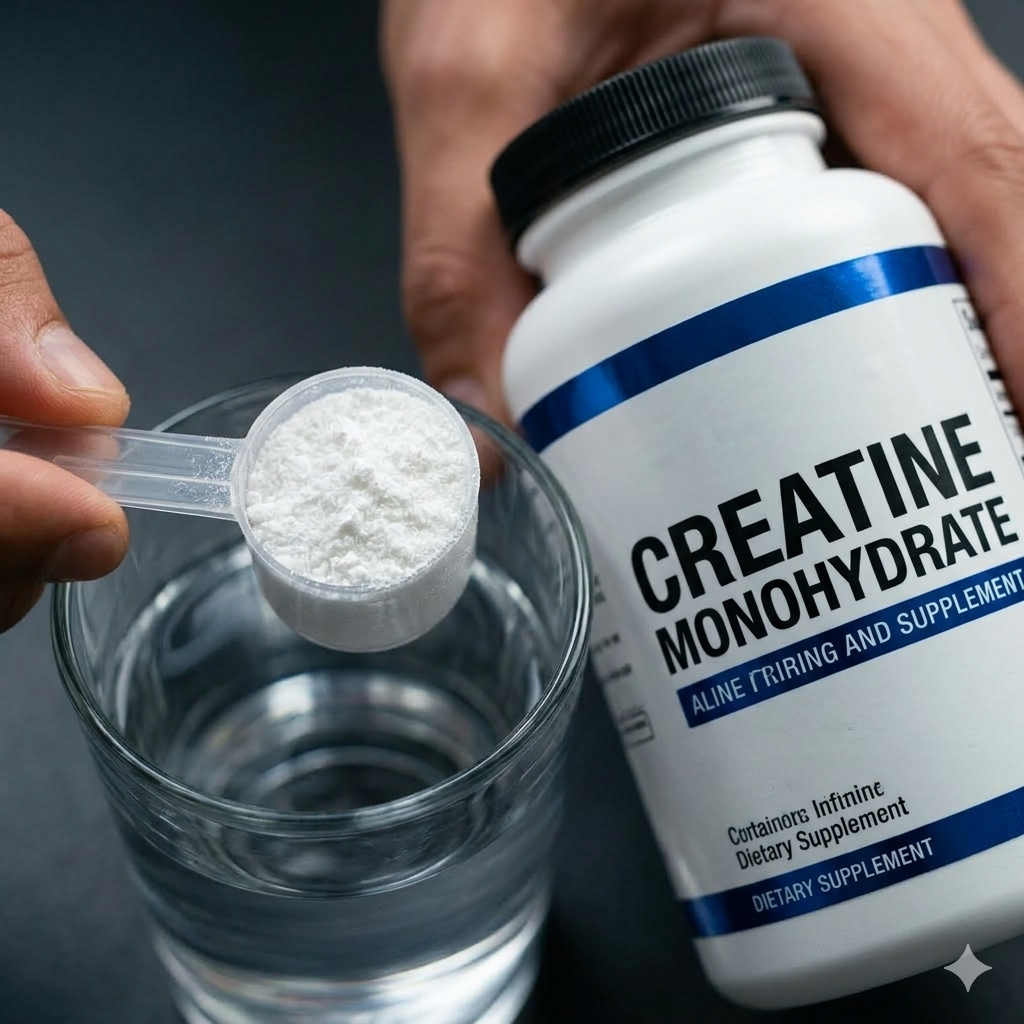
What is Creatine? The Ultimate Guide to the World’s Most Researched Supplement №1
In the world of fitness, trends come and go with the seasons. However, one supplement has maintained its “gold standard” status for decades, backed by undeniable effectiveness and safety. We’re talking about creatine. Despite the lingering myths, the scientific consensus is clear: it is a powerful, natural, and versatile tool for boosting both physical and cognitive performance.
Table of Contents
1. What is Creatine: Lab Chemical or Nature’s Gift?
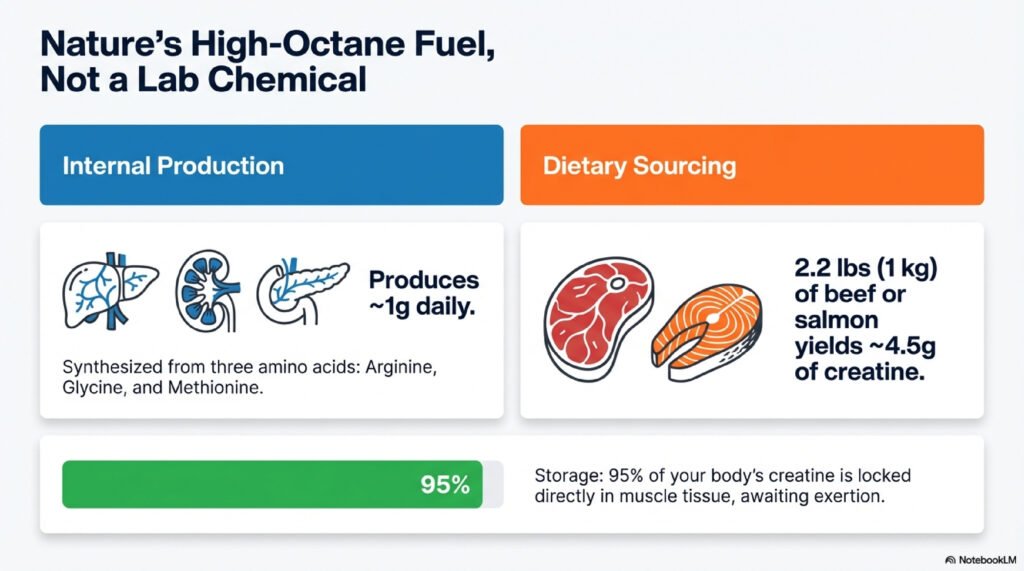
The biggest misconception is that creatine is a synthetic lab chemical or some kind of “steroid.” In reality, it is a natural compound that your body produces on its own and sources from everyday foods.
How Your Body Gets Creatine:
- Self-Production: Your liver, kidneys, and pancreas work together to produce about 1 gram of creatine daily. This process uses three amino acids: arginine, glycine, and methionine.
- Dietary Sources: Creatine is abundant in animal-based proteins, particularly seafood and red meat. For instance, 2.2 lbs (1 kg) of beef or salmon contains roughly 4.5 grams of creatine.
- Storage: About 95% of your body’s creatine is stored directly in your muscle tissue, locked and loaded for immediate use during physical exertion.
2. How It Works: Your Body’s High-Speed Energy Recharger
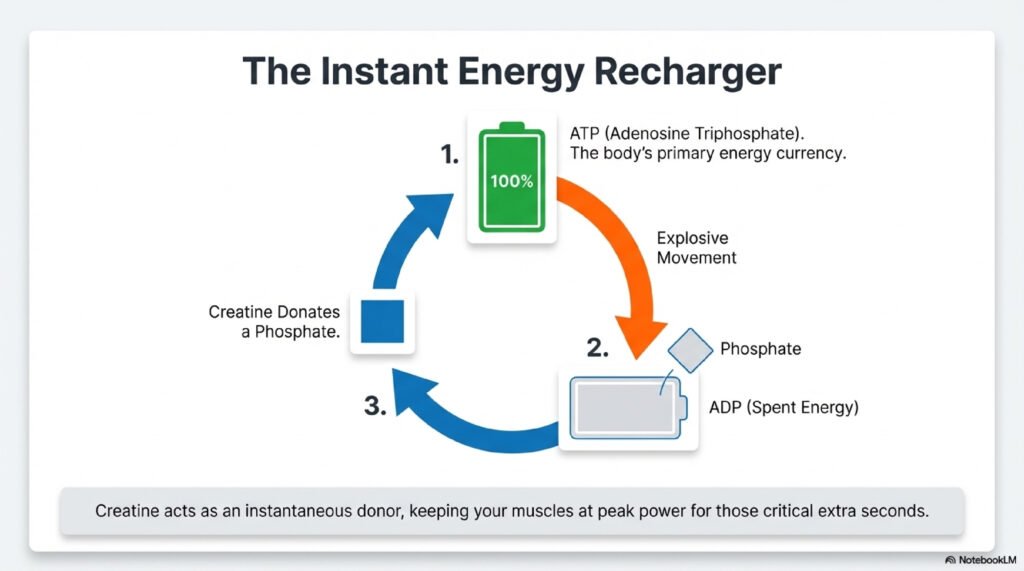
To understand why supplementation is beneficial, we have to look at the “power plant” of your cells. The primary energy currency in the human body is a molecule called ATP (Adenosine Triphosphate).
When you perform an intense movement (like a heavy bench press or a sprint), the ATP molecule loses a phosphate group and turns into ADP (Adenosine Diphosphate)—essentially “spent” energy. At that moment, your muscles’ supply of pure energy drops rapidly.
The Role of Creatine:
Creatine acts as an instantaneous donor. It quickly hands over its phosphate group to the ADP molecule, turning it back into high-energy ATP. This happens almost instantly, allowing your muscles to stay at peak power for just a bit longer.
3. Four Key Benefits
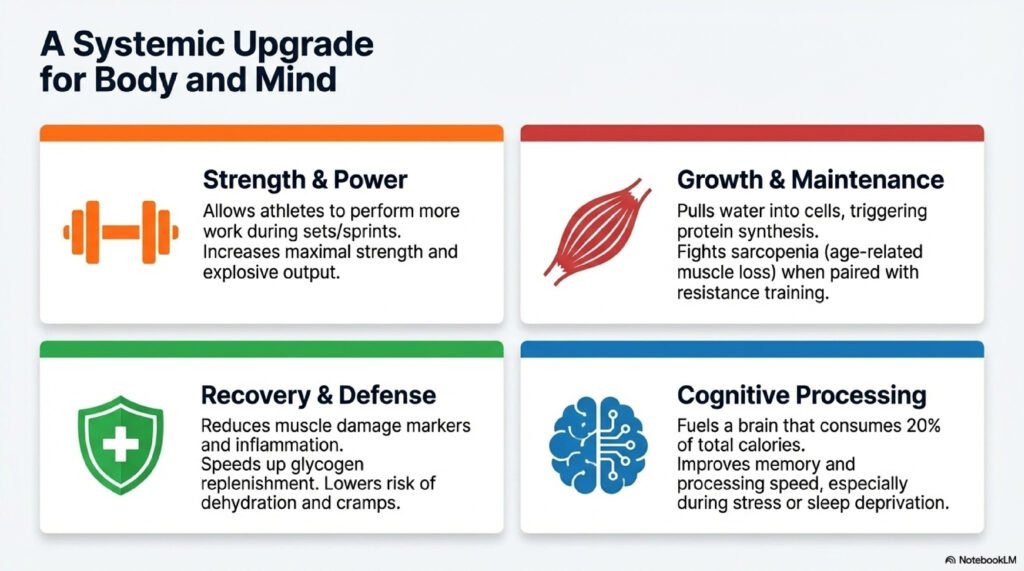
Benefit #1: Stronger, More Powerful Workouts
With an extra source of fast-access energy, you can push past your usual limits. Research consistently shows that creatine allows athletes to:
- Perform more work during sets or sprints.
- Increase maximal strength and explosive power.
- Achieve significantly better long-term gains.
Benefit #2: Muscle Growth and Maintenance
Creatine doesn’t just provide strength; it creates the ideal environment for hypertrophy (muscle growth):
- Training Volume: Being able to grind out 1 or 2 more reps per set directly triggers muscle tissue growth.
- Cell Hydration: Creatine is “osmotically active,” meaning it pulls water into your muscle cells. This doesn’t just make muscles look fuller and denser; it acts as a biological signal to kickstart protein synthesis.
- Healthy Aging: When paired with resistance training, creatine helps older adults fight sarcopenia (age-related muscle loss).
Benefit #3: Recovery and Injury Prevention
The benefits don’t stop when you leave the gym:
- It reduces markers of muscle damage and inflammation, leading to less soreness.
- It helps the body replenish glycogen stores more efficiently after grueling workouts.
- It lowers the risk of dehydration, muscle cramps, and injuries to the musculoskeletal system.
Benefit #4: Brain Health and Support
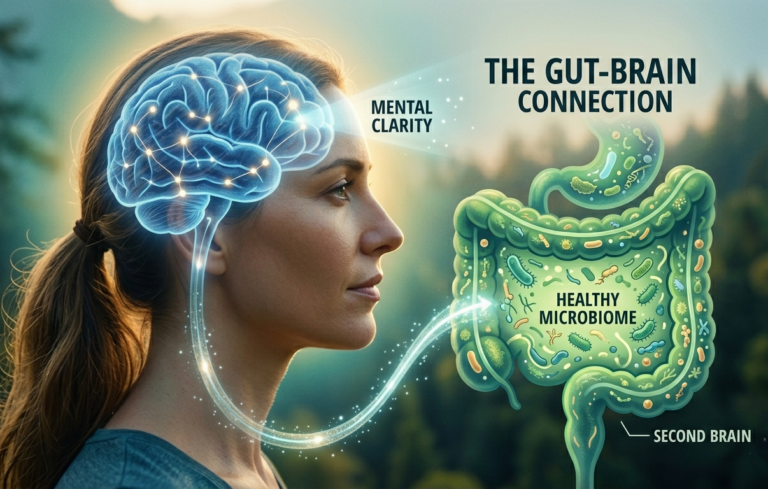
The brain is an “energy-hungry” organ, consuming up to 20% of your total calories. Creatine helps fuel brain cells, providing noticeable cognitive perks:

- Improves memory and information processing speed.
- The effect is most noticeable during times of stress, such as sleep deprivation or intense studying.
- Ongoing research is exploring its potential neuroprotective properties for long-term brain health.
4. Which Form Should You Choose?
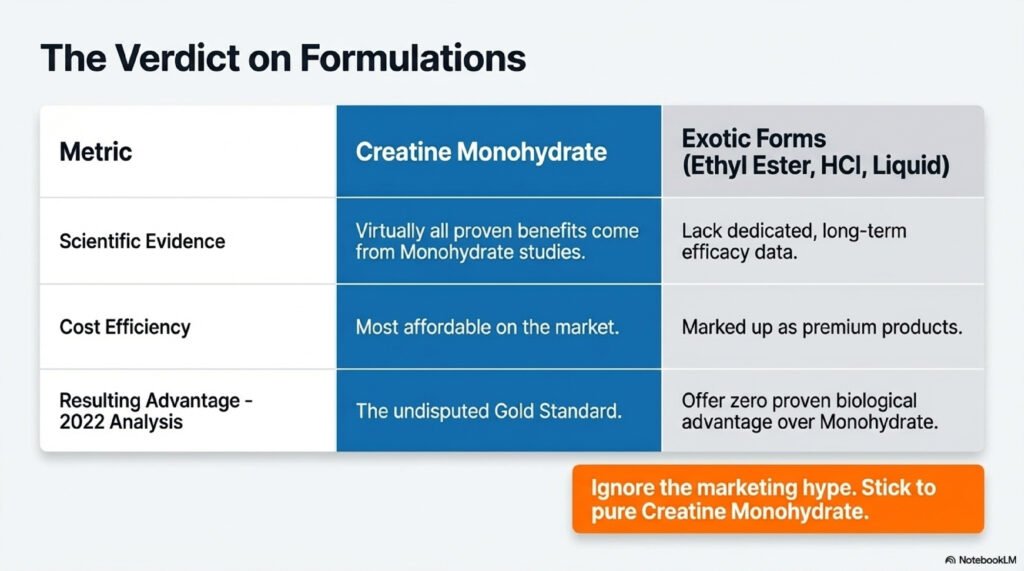
The supplement market is flooded with “exotic” forms like Creatine Ethyl Ester, HCl, or Liquid Creatine. However, the science is settled: Creatine Monohydrate is the Gold Standard.
- Evidence-Based: Virtually all proven benefits come from studies using monohydrate.
- Efficiency and Value: It is the most affordable form and also the most effective.
- The Verdict: A 2022 analysis showed that alternative forms are often more expensive but offer no proven advantage over standard monohydrate.
5. How to Take It: Two Paths to Success
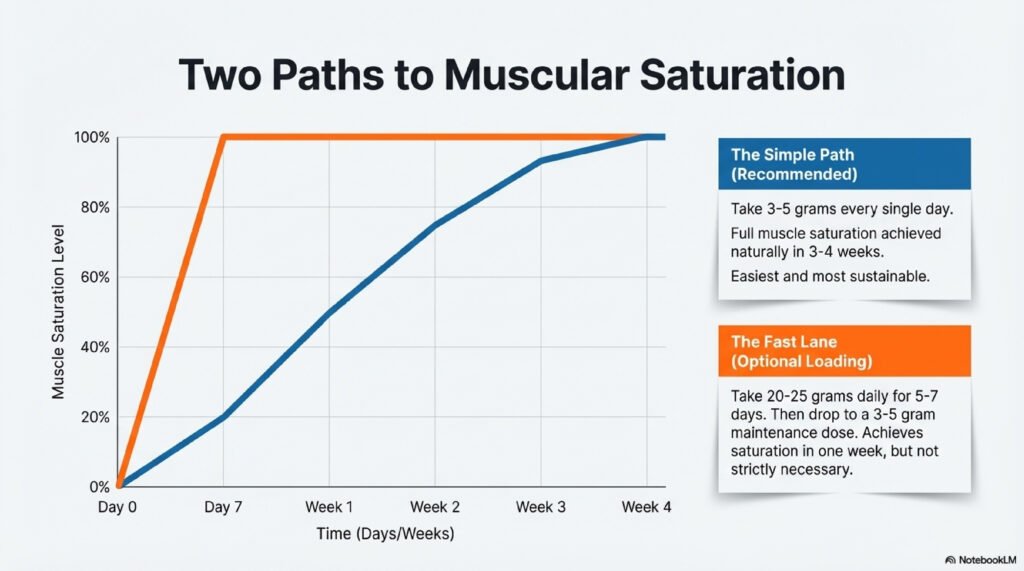
There are two main ways to saturate your muscles with creatine:
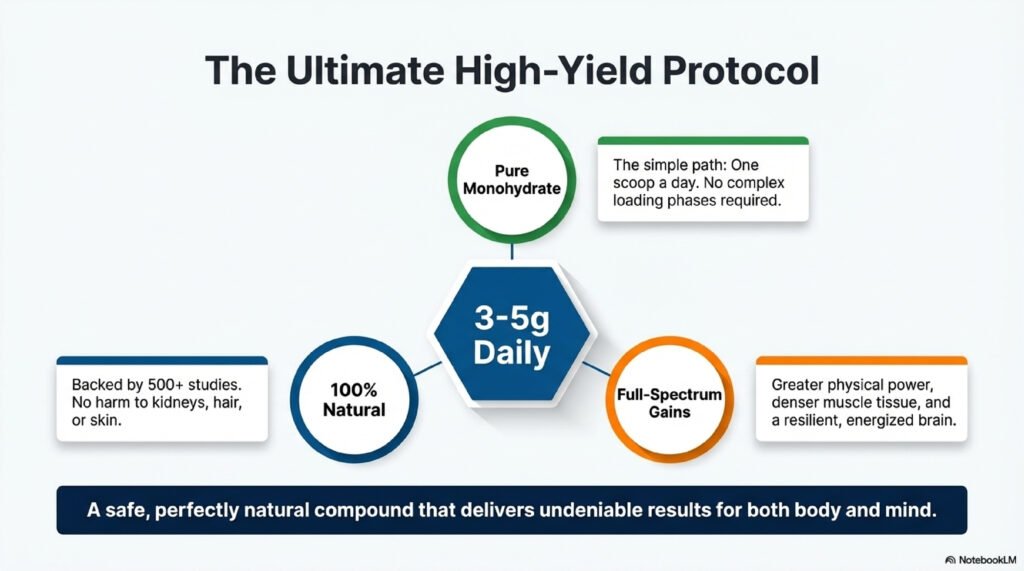
- The Simple Path (Recommended): Take 3–5 grams every day. Your muscles will reach full saturation in about 3–4 weeks. This is the easiest and most sustainable method.
- The Fast Lane (Optional): The “Loading Phase.” You take 20–25 grams a day (split into 4–5 doses) for 5–7 days, then drop down to the 3–5 gram maintenance dose. This gets you results faster but isn’t strictly necessary.

6. Clearing the Air: Is It Safe?
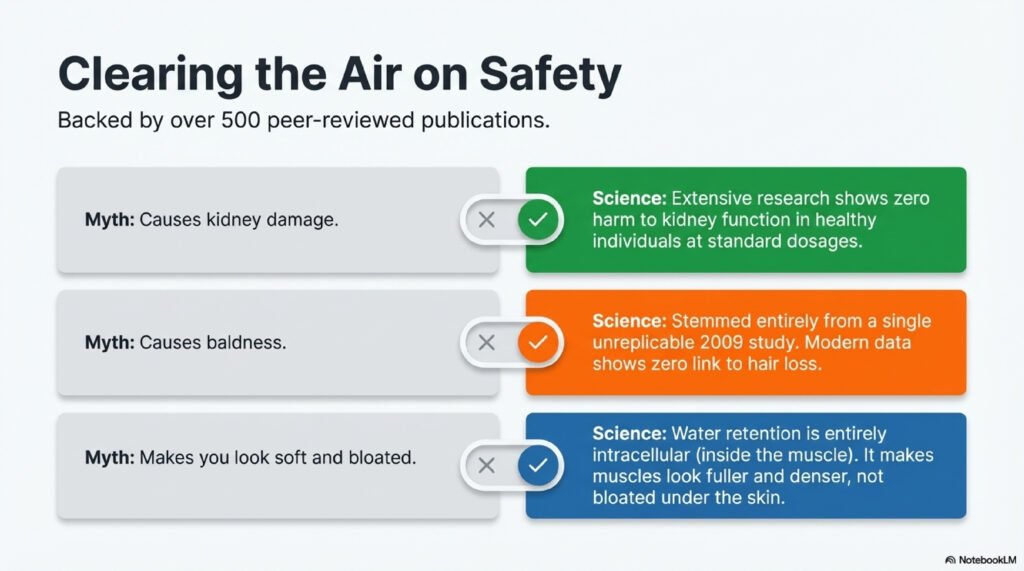
With over 500 peer-reviewed publications, creatine is one of the most studied supplements on the planet. Decades of research prove it is safe for healthy individuals.
- The Kidney Myth: Extensive research has found no harm to kidney function in healthy people when following standard dosages. (Those with pre-existing kidney conditions should always consult a doctor first).
- The Hair Loss Myth: This concern stemmed from a single 2009 study that was never replicated. Modern data does not support a link between creatine and hair loss.
- The “Bloating” Myth: Creatine increases water retention inside the muscle cells (intracellular), not under the skin. It makes you look “jacked,” not “bloated.”
7. Who Is It For?
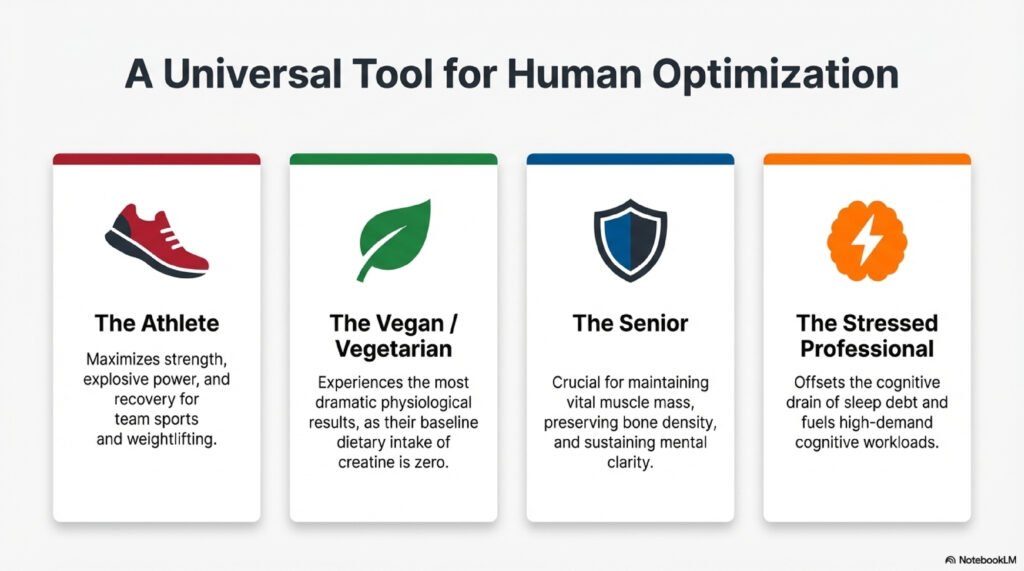
Creatine is surprisingly universal:
- Athletes: For strength, power, and team sports.
- Vegetarians and Vegans: Since they don’t get creatine from meat, they often see the most dramatic results from supplementation.
- Seniors: To maintain muscle mass, bone density, and mental clarity.
- High-Stress Individuals: Those dealing with sleep debt or heavy cognitive workloads.
What Happens if You Stop?
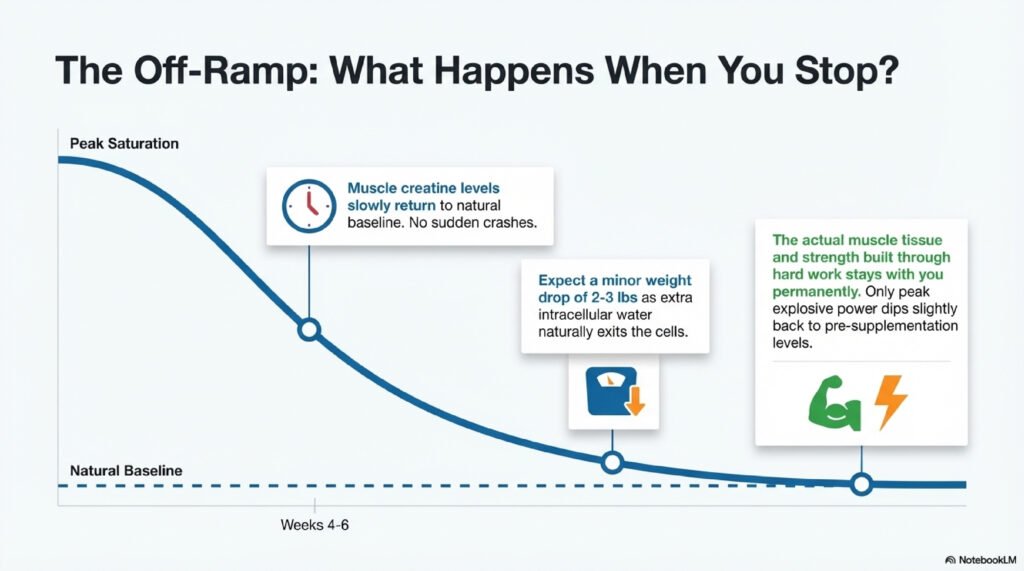
Don’t worry—your progress won’t vanish overnight. If you stop taking it:
- Creatine levels in your muscles will return to baseline in 4–6 weeks.
- You might see a minor drop in weight (2–3 lbs) as the extra intracellular water leaves.
- The actual muscle and strength you built through hard work stays with you, though your “peak” explosive power might dip slightly.
Bottom Line: Creatine is a natural, safe, and simple way to support both your body and your mind. Just 3–5 grams of monohydrate a day is all it takes to unlock these benefits.