The Nutrition Ecosystem: A Sound Approach to Lifelong Health
In today’s world, nutrition is often viewed as a battlefield or a rigid mathematical equation. However, the latest research and the 2025 dietary guidelines suggest a paradigm shift: moving away from strict deprivation toward creating a Nutrition Ecosystem that fosters a healthy internal ecosystem.
To achieve true health, we must stop fighting our bodies and start cultivating an environment where metabolism and appetite regulate themselves naturally.

Table of Contents

The Restriction Trap: Why Diets Backfire
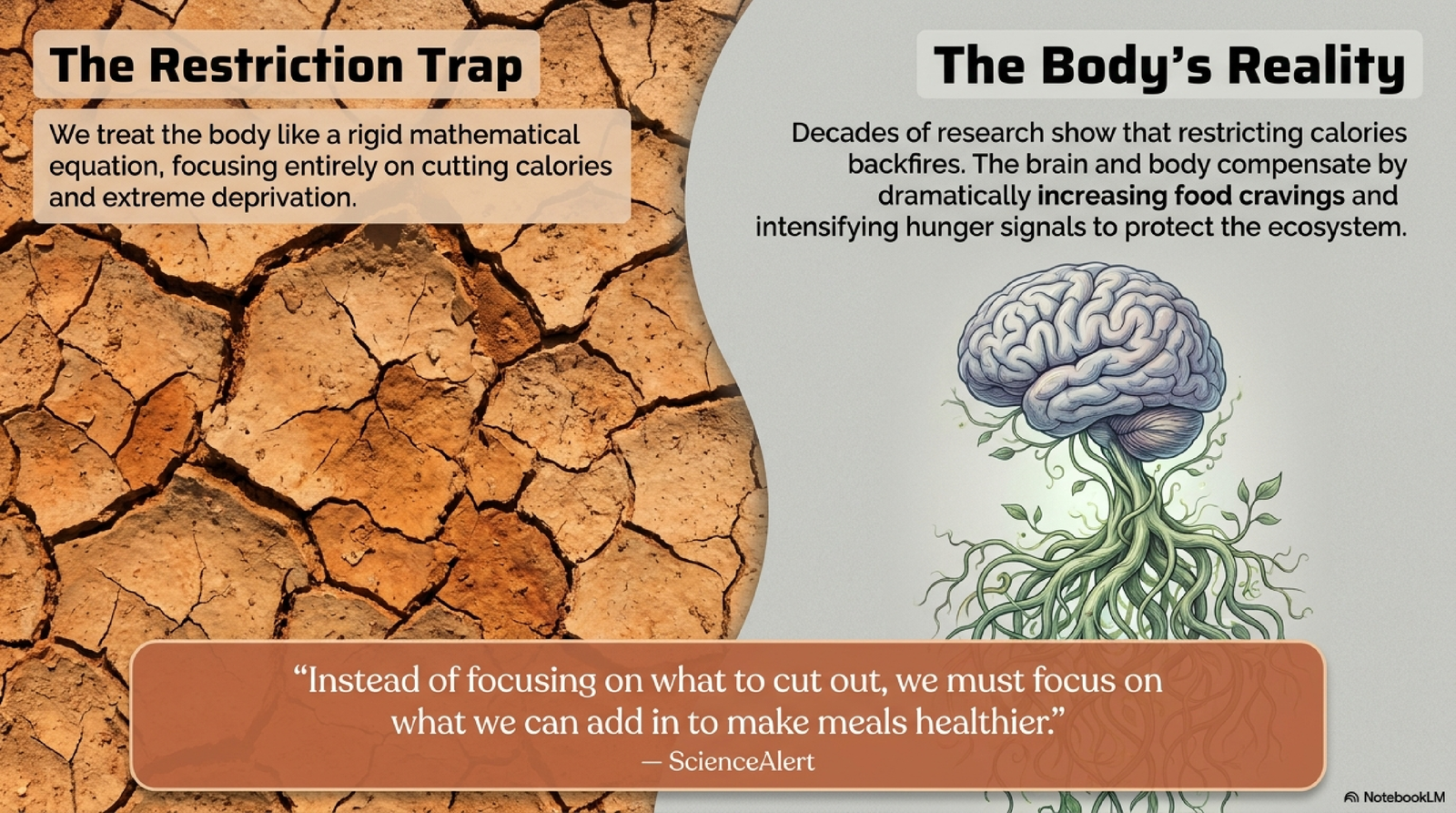
The traditional approach to weight loss is often built on extreme calorie deficits and deprivation. We have been conditioned to treat the body like a mathematical formula where you simply subtract food to get a result. But the reality of human biology is far more complex.
Decades of research show that restricting calories backfires. The brain and body view hunger as a threat to the ecosystem and trigger powerful compensatory mechanisms:
- Intensified Hunger Signals: The body begins to demand food more insistently.
- Increased Cravings: The psychological and physical urge to consume high-calorie foods becomes overwhelming to protect the ecosystem.
Instead of focusing on what to cut out, modern nutrition science urges us to focus on what we can add in to make meals healthier and more satisfying.
Quality Over Quantity: The Biological Response to Calories
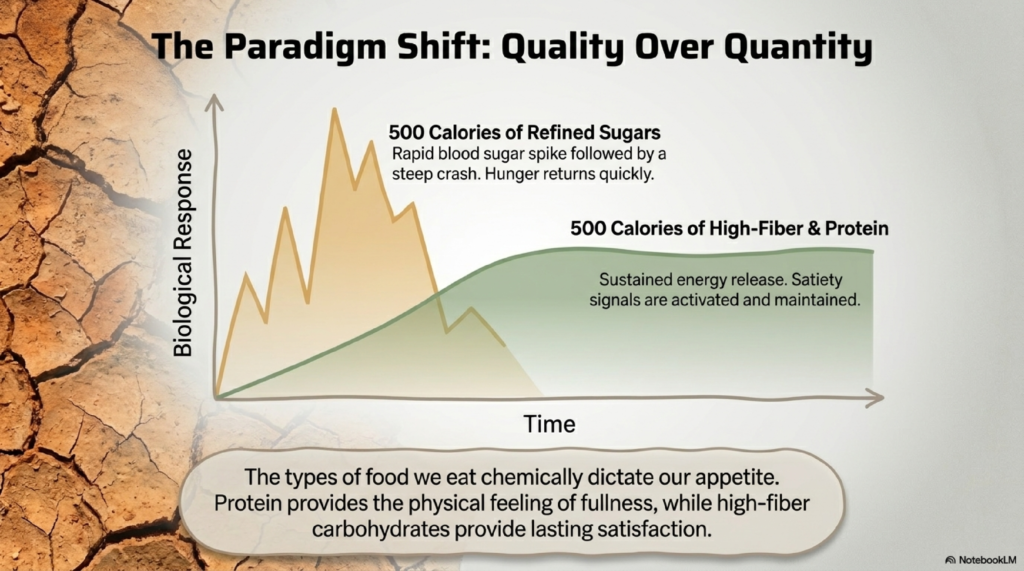
One of the biggest misconceptions is that “a calorie is just a calorie.” While true in a laboratory, it is false regarding the body’s biological response.
Comparing Two 500-Calorie Sources:
- Refined Sugars: These cause a rapid blood sugar spike followed by a steep crash. Consequently, hunger returns quickly.
- High-Fiber & Protein: These provide a sustained energy release. Satiety signals are activated and maintained over a longer period.
The types of food we eat chemically dictate our appetite. Protein provides the physical feeling of fullness, while high-fiber carbohydrates provide lasting satisfaction.
The Blueprint Evolution: 2025 Dietary Consensus for Nutrition Ecosystem
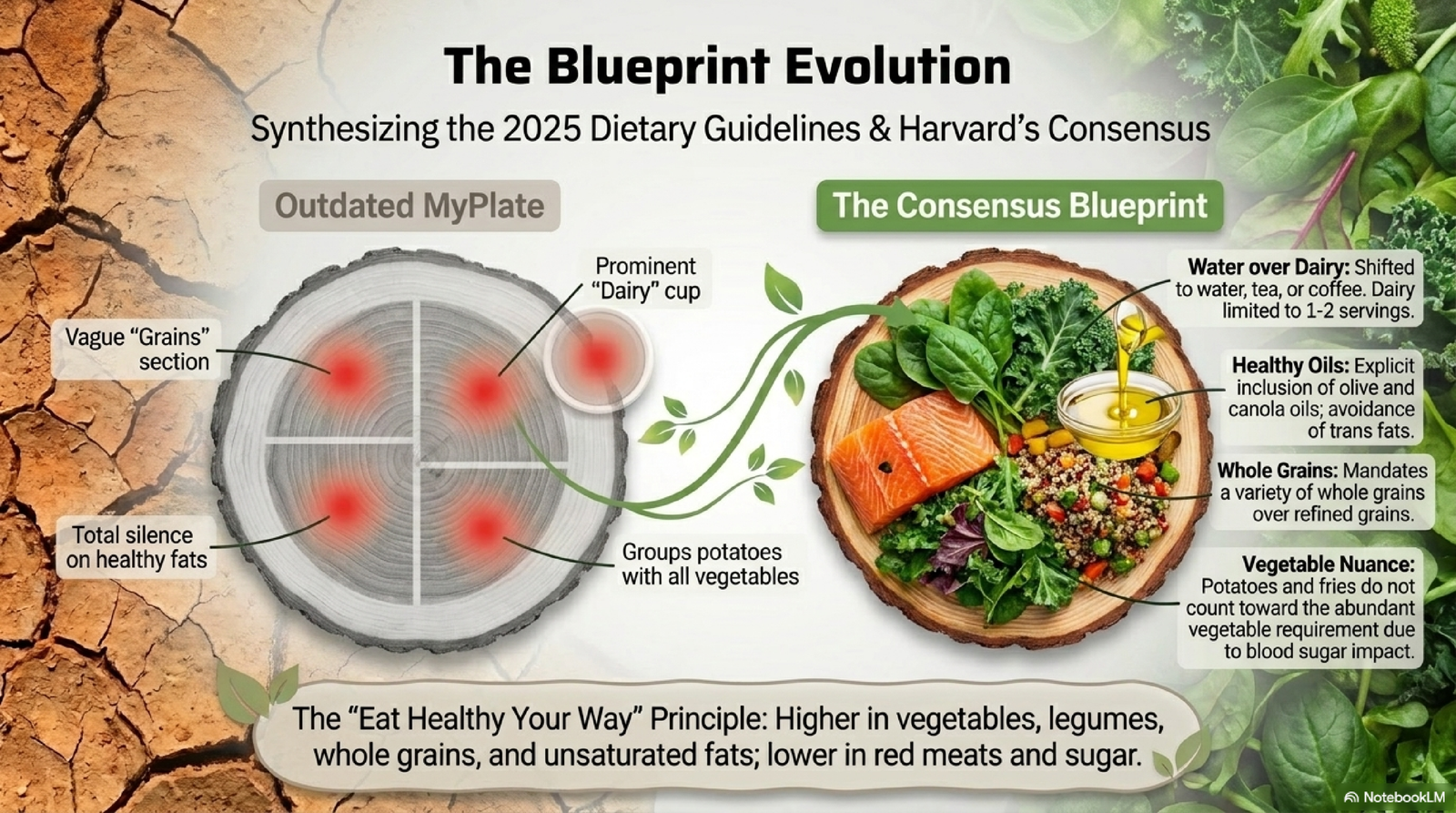
The 2025 Dietary Guidelines and the Harvard Consensus have significantly updated the “MyPlate” model to reflect modern science.
Key Shifts in the Modern Nutrition Strategy:
- Vegetable Nuance: Unlike older models, potatoes and fries do not count toward the abundant vegetable requirement because of their negative impact on blood sugar.
- Whole Grain Mandate: There is a strict requirement to choose a variety of whole grains over refined grains.
- Healthy Oils: Healthy fats are now an explicit part of the plan. There is a specific focus on olive and canola oils while strictly avoiding trans fats.
- Water Over Dairy: The primary beverage choice has shifted to water, tea, or coffee. Dairy is now limited to just 1–2 servings per day.
- The “Eat Healthy Your Way” Principle: The focus is on a plant-forward diet higher in legumes and unsaturated fats, and lower in red meats and sugar.
Complex Carbohydrates vs. Deceptive Sugars
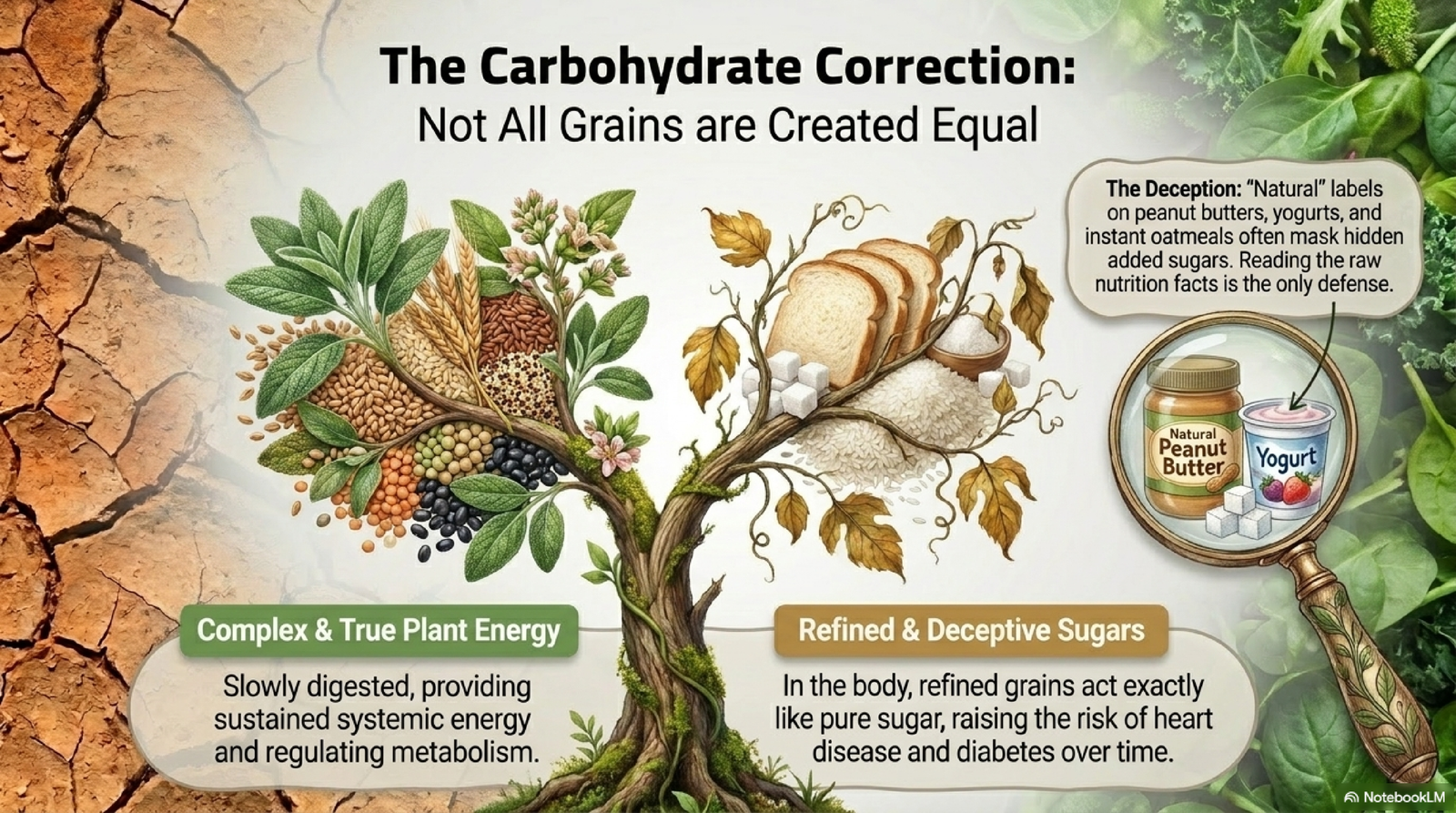
Not all grains are created equal, and understanding this is vital for regulating metabolism.
- Complex & True Plant Energy: These are slowly digested, providing sustained systemic energy.
- Refined & Deceptive Sugars: In the body, refined grains act exactly like pure sugar. Over time, this raises the risk of heart disease and diabetes.
The Deception Warning: “Natural” labels on products like peanut butter, yogurt, and instant oatmeal often mask hidden added sugars. Reading the raw nutrition facts is the only defense for the consumer.
«Feed your health, not your sugar — choose plant-based control!»
Choosing Your Path: Specialized Dietary Ecosystems
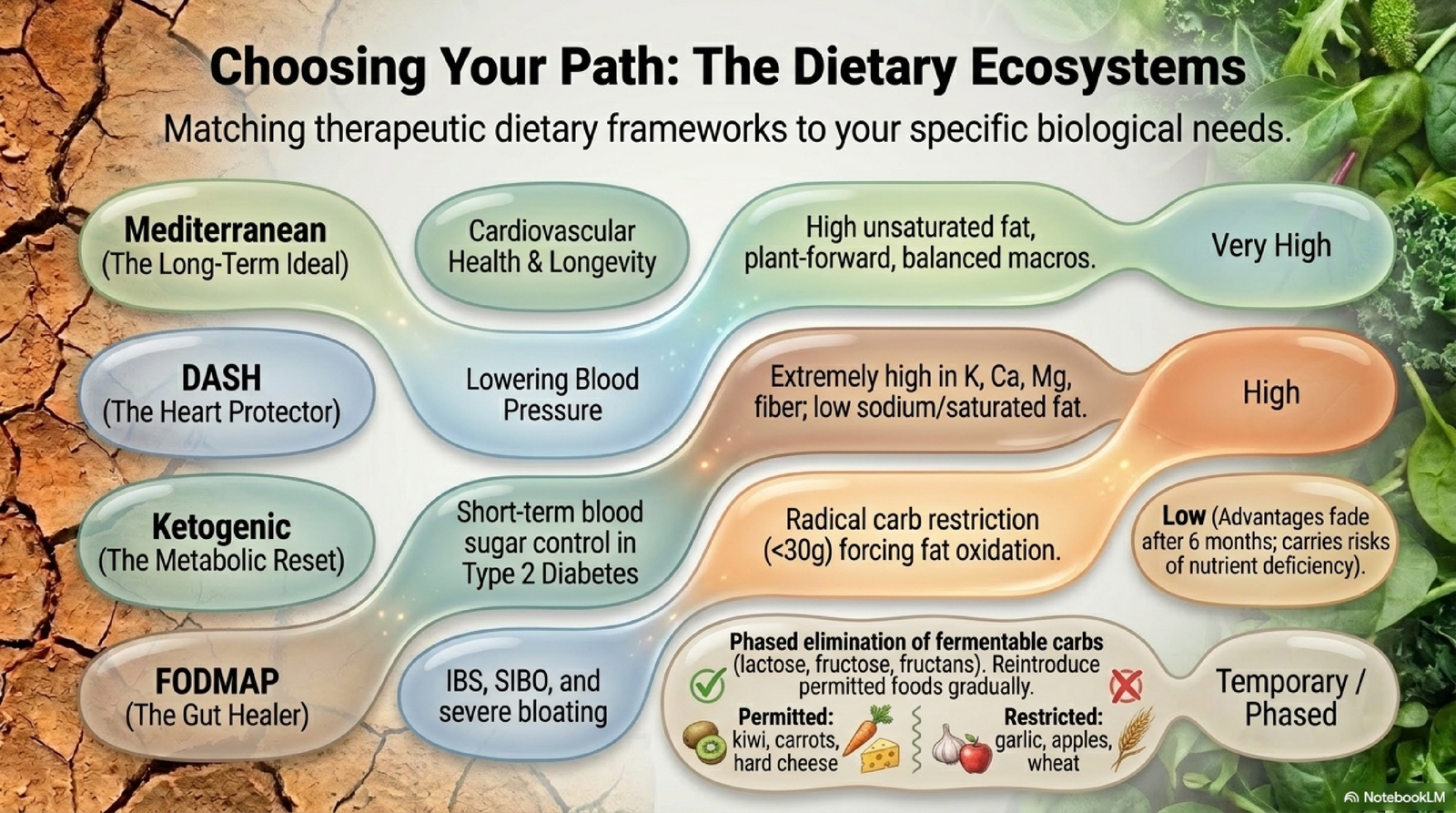
Dietary frameworks should be matched to specific biological needs.
| Ecosystem | Primary Goal | Key Features |
| Mediterranean | Cardiovascular health & longevity | The long-term ideal; high in unsaturated fats and plant-forward. |
| DASH | Lowering blood pressure | Extremely high in potassium, calcium, magnesium, and fiber; low sodium. |
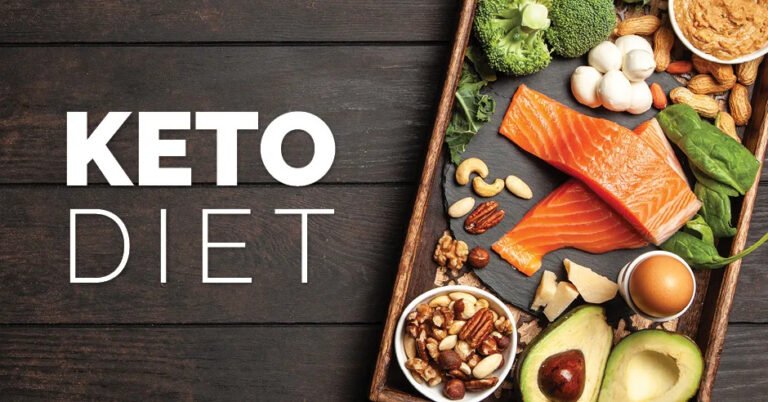
| Ketogenic | Metabolic reset | Radical carb restriction (<30g) to force fat oxidation. Risks include nutrient deficiency. |
| FODMAP | Gut healing (IBS/SIBO) | Phased elimination of fermentable carbs like wheat, garlic, and apples. |
The Metabolic Foundation: Energy Roots
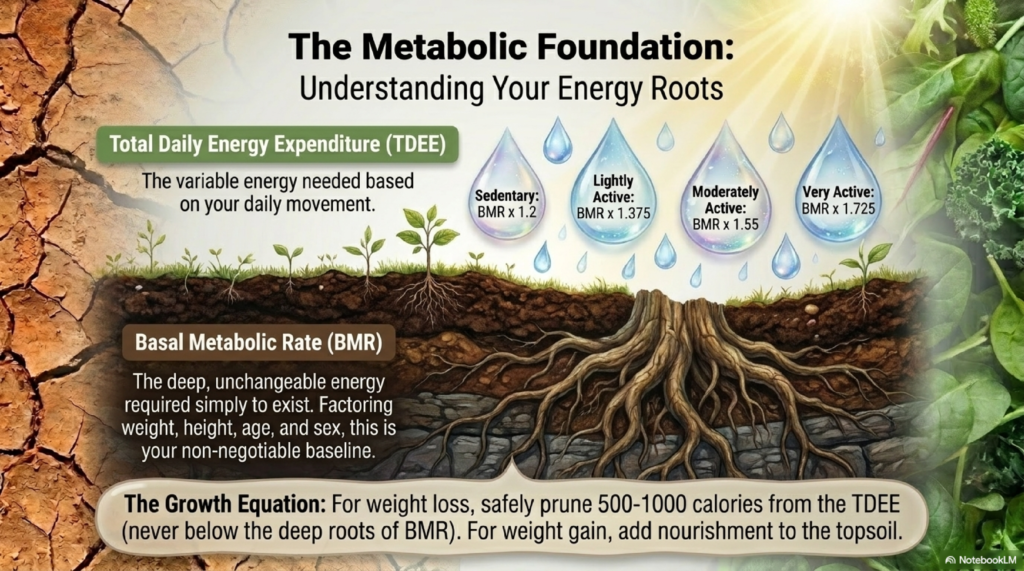
Understanding how your body uses energy helps you manage weight safely without damaging your “roots”.
- Basal Metabolic Rate (BMR): This is the deep, unchangeable energy required simply to exist. It factors in age, sex, weight, and height; it is your non-negotiable baseline.
- Total Daily Energy Expenditure (TDEE): The variable energy needed based on daily movement. It ranges from Sedentary (BMR x 1.2) to Very Active (BMR x 1.725).
The Growth Equation: To lose weight safely, prune 500–1000 calories from your TDEE, but never go below your BMR. To gain weight, add nourishment to the “topsoil” by exceeding your TDEE.
Macronutrient Harmony for Nutrition Ecosystem: Building Your Plate
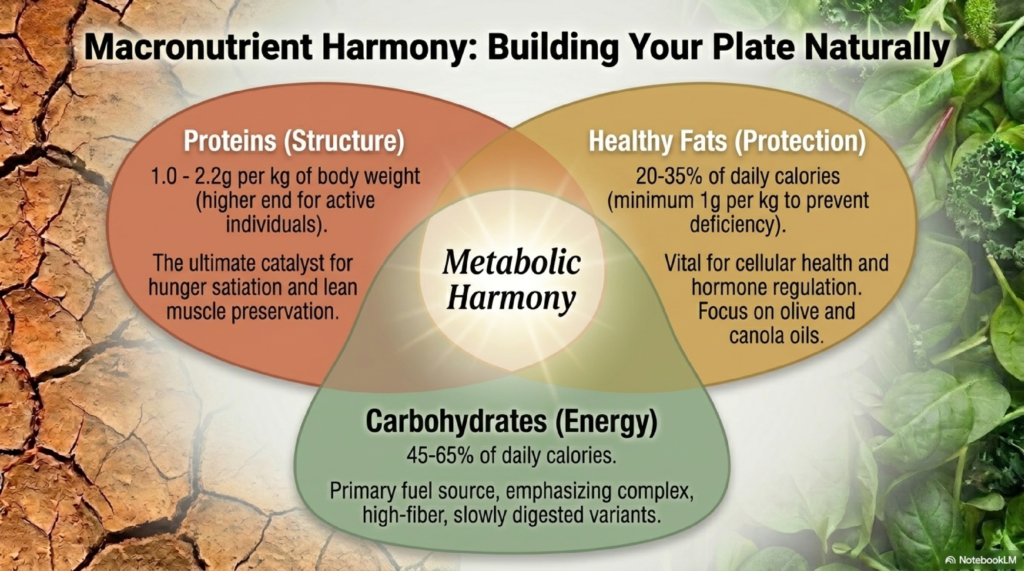
Balanced nutrition requires a harmony of three core elements:
- Proteins (Structure): 1.0–2.2g per kg of body weight. This is the ultimate catalyst for hunger satiation and muscle preservation.
- Healthy Fats (Protection): 20–35% of daily calories. These are vital for cellular health and hormone regulation.
- Carbohydrates (Energy): 45–65% of daily calories. Focus on complex, high-fiber variants for primary fuel.
The Behavioral Ecosystem: Habits and Environment
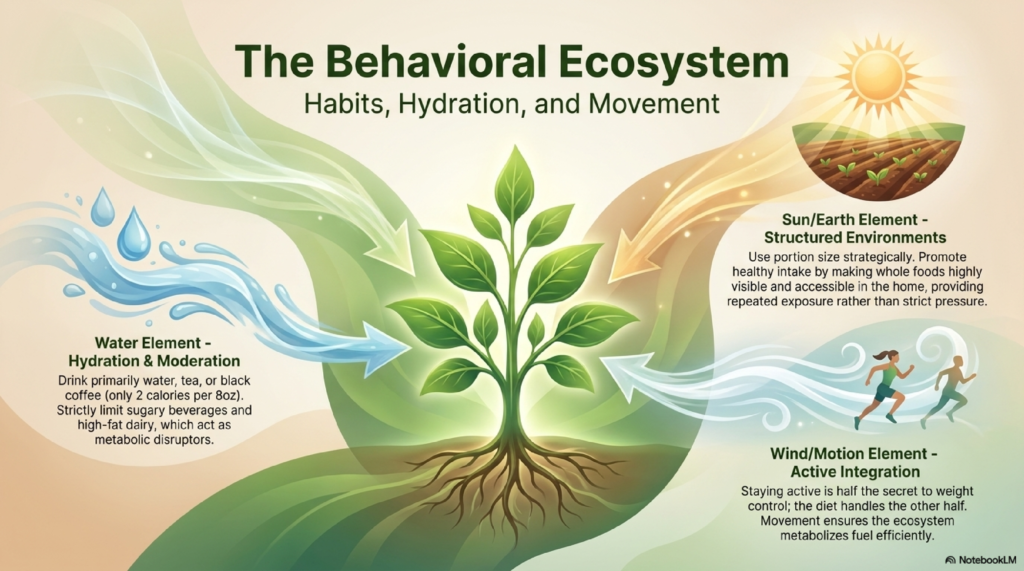
Health is maintained by environmental and behavioral “elements”:
- Water Element: Drink primarily water, tea, or black coffee (which has only 2 calories per 8oz). Limit sugary beverages and high-fat dairy, which act as metabolic disruptors.
- Sun/Earth Element: Use your environment strategically. Make whole foods highly visible and accessible in your home to encourage healthy intake through exposure rather than pressure.
- Wind/Motion Element: Staying active is half the secret to weight control. Movement ensures the ecosystem metabolizes fuel efficiently.
Conclusion: Cultivating Your Unique Ecosystem
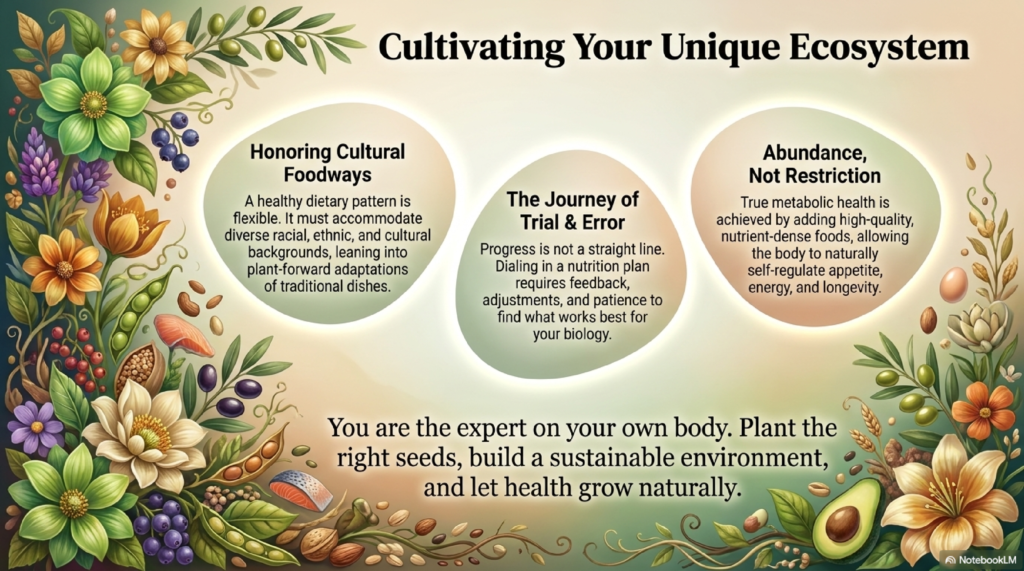
A healthy dietary pattern is flexible and must accommodate diverse cultural and ethnic backgrounds through plant-forward adaptations.
Progress is not a straight line. Finding the right plan requires trial, error, and patience to see what works best for your specific biology. True metabolic health is achieved through abundance, not restriction. By adding high-quality, nutrient-dense foods, you allow your body to naturally self-regulate. You are the expert on your own body—plant the right seeds, build a sustainable environment, and let health grow naturally.